

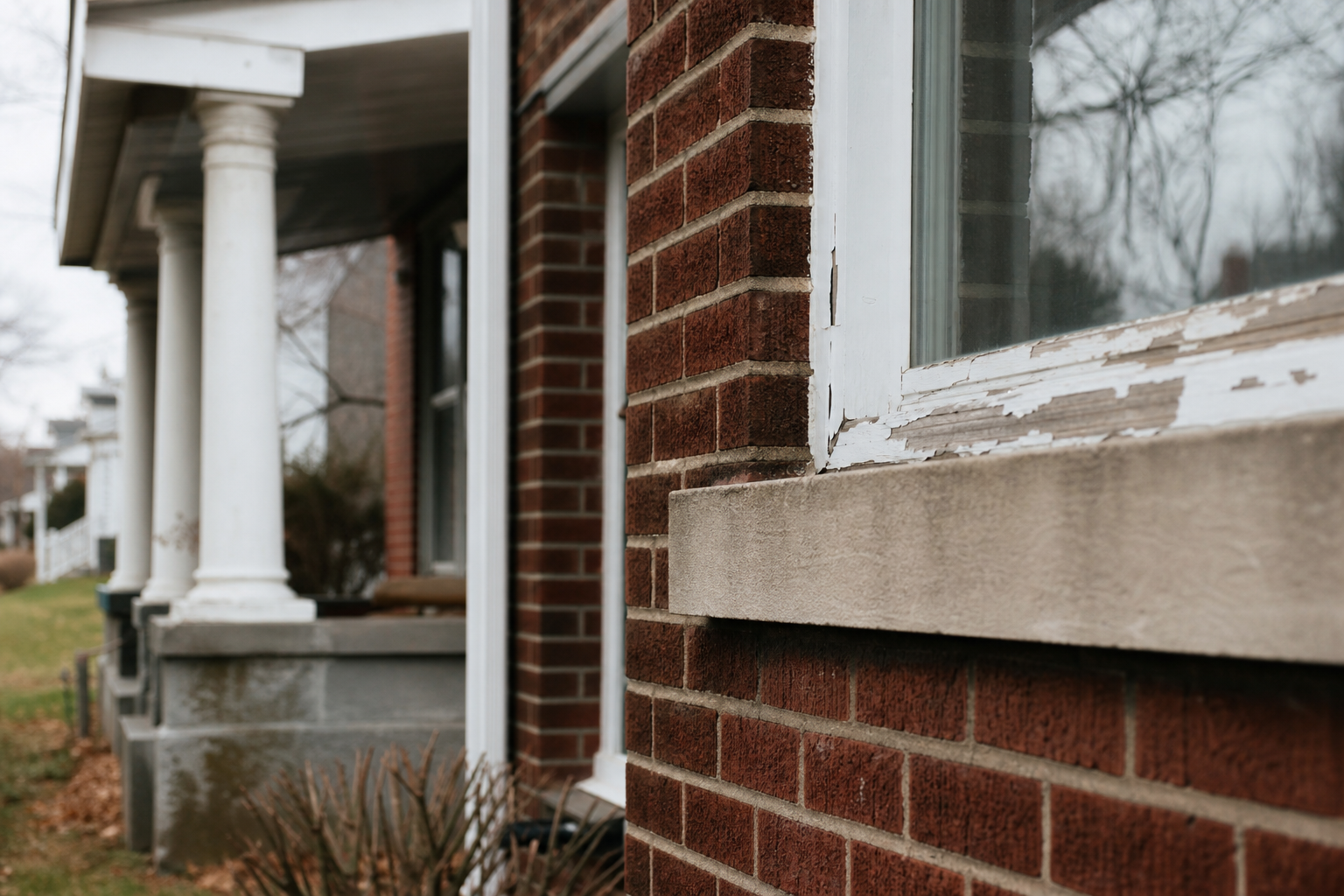
In Sarnia–Lambton's 2026 market, sellers should prioritize safety and mechanical repairs plus targeted cosmetic updates like fresh paint and flooring. Full kitchen or bathroom gut renovations rarely pay off given softening prices and 4+ months of inventory. Price band and current condition determine the right strategy.
Should you renovate before selling your home in Sarnia–Lambton?
In Sarnia–Lambton's 2026 market, most sellers are better served by targeted repairs and neutral cosmetic updates than by full renovations. With the MLS® HPI benchmark price at $497,900 in July 2026 and inventory sitting above four months, buyers have real choices, and a well-maintained, clean home at the right price will almost always outperform an over-renovated one that's priced to recover costs.
This is the question I hear from almost every seller I sit down with: "Should I redo the kitchen before I list?" The honest answer is: it depends on your price band, your home's current condition, and what buyers in that segment actually expect. Let me walk you through what the local data says, and what I've seen work in practice.
What the 2026 Sarnia–Lambton Market Tells Sellers About Condition
The market context matters here, so let's start with the numbers.
According to CREA's Sarnia–Lambton board statistics, 136 homes sold in July 2026, down 6.8% from July 2025. Year-to-date through July, sales totalled 870 units, a 9.2% drop from the same period in 2025. The average sale price in July 2026 was $539,120, down 3.2% year-over-year, and the MLS® HPI single-family benchmark sat at $497,900, off 4.4% from a year earlier.
That's a softer market than 2025, which was itself described by Blackburn News as a "flat" year, the 2025 year-to-date average price was $525,416, essentially identical to $526,550 in 2024.
What does this mean for renovation decisions? When prices are rising fast, a seller can sometimes recoup a renovation cost through appreciation alone. In a flat-to-softening market, that buffer disappears. Every dollar you spend on pre-sale improvements needs to earn its place by either shortening your time on market or protecting your asking price, not by chasing a peak that has already passed.
Inventory and days on market: why condition matters more now
According to CREA's Sarnia–Lambton market conditions data, months of inventory for single-detached homes stood at 4.0 at the end of Q1 2026. The median days on market for sold single-detached homes in Q1 2026 was 29 days, up from 26 days in Q1 2025.
Four months of inventory means buyers can compare multiple similar homes before making a decision. That comparison almost always comes down to two things: price and condition. A home with obvious deferred maintenance or heavily dated finishes doesn't lose buyers in a single conversation, it loses them the moment they pull up the next listing.
The February 2026 data makes this even clearer. Sarnia News Today reported that only 72 homes sold that month, a 24.2% decline from February 2025 and 34.7% below the 10-year February average. The average sale price that month was $421,186, down 21.7% year-over-year. That kind of buyer-side caution is exactly the environment where condition separates homes that sell from homes that sit.
With a sale-to-list ratio running around 97.5%, sellers are not getting far above asking price in this market. The key levers are your initial list price and the condition you present, not hoping a bidding war will paper over problems.
The Fix-or-Skip Framework: By Condition Category and Price Band
I break pre-sale work into three buckets: must-do repairs, targeted cosmetic updates, and full renovations. Where you land in each bucket depends partly on your price band, because buyer expectations shift meaningfully across segments.
Must-do repairs (regardless of price band)
These are non-negotiable in any market, and especially in 2026's buyer-friendly conditions. Safety and mechanical issues don't just deter buyers psychologically, they can derail financing. A buyer's lender may flag a leaking roof, knob-and-tube wiring, or a non-functional furnace during the appraisal process, and conditions in the offer give buyers a clear exit if inspections turn up problems like these.
Fix before you list:
- Electrical safety issues and plumbing leaks
- Non-functional or end-of-life HVAC systems
- Active roof leaks or visible water damage
- Any mold or structural concerns
- Broken windows, doors, or exterior components
- Incomplete small projects, missing trim, unpatched walls, half-finished basement work
That last one is underrated. A home that looks like someone started projects and stopped signals risk to buyers, even when the underlying structure is fine. Finish what's started before you list.
Targeted cosmetic updates: where the speed-of-sale gains live
This is where most sellers get the best return on their effort. CMHC and national industry guidance consistently point to neutral, broadly appealing cosmetic updates as the most reliable way to improve buyer interest in balanced or buyer-leaning markets, not because they add measurable dollar value on a spreadsheet, but because they reduce friction. Buyers make faster decisions on homes that feel move-in ready.
High-impact, targeted cosmetic work to consider:
- Fresh, neutral interior paint, especially over bold colours or heavily worn walls
- Replacing very worn or mismatched flooring in main living areas
- Updated lighting fixtures and cabinet hardware
- Minor kitchen refreshes: painted cabinets, a modern backsplash, or mid-range countertop resurfacing where the existing kitchen is functional but dated
- Curb appeal basics: fresh mulch, trimmed landscaping, a clean front entry
These are the updates that move a home from "I'd have to fix this" to "I could move right in." In a market where buyers are comparing four or five similar homes, that mental shift matters.
Price band expectations: entry-level vs. mid-market vs. upper end
CREA's Sarnia–Lambton sales-by-price-range data confirms that the local MLS tracks activity across bands from under $300K through $600K and above. The core of the market sits in the $300K–$600K range, and buyer expectations differ meaningfully across those bands.
| Price Band | Buyer Expectation on Condition | Pre-Sale Priority |
|---|---|---|
| Under $400K | Structural and mechanical soundness; cosmetic datedness accepted if priced right | Safety repairs, functional systems, clean presentation |
| $400K–$600K | Move-in ready; updated surfaces, modern fixtures, minimal visible repairs | Targeted cosmetics (paint, flooring, hardware) plus all mechanical repairs |
| Over $600K | Good bones and good cosmetics; longer marketing times if cosmetics are skipped | All repairs plus higher-impact cosmetic refreshes; staging strongly recommended |
Entry-level buyers in the under-$400K range are often stretching their budget to get into the market. They may be using a high-ratio insured mortgage and navigating the mortgage stress test, which means they have less cash left over for post-purchase renovations. A home that's structurally sound and priced competitively will attract this buyer even with dated finishes. What they can't absorb is a surprise roof or a furnace that needs immediate replacement.
Mid-market buyers in the $400K–$600K range are the most condition-sensitive in Sarnia–Lambton right now. They have options, and with Q1 2026 single-detached sales down 8.1% year-over-year, there are more competing listings than there were a year ago. This is the segment where fresh paint and updated flooring genuinely shorten your days on market.
At the upper end, buyers expect the full package. Skipping cosmetic work in this band tends to result in longer marketing times or larger price negotiations at the offer table, not a pass from buyers who "get what they're paying for."
When to skip the full renovation
Here's the honest answer on full kitchen and bathroom gut renovations: in most cases, I advise sellers to skip them. In Sarnia–Lambton's current market, with the average price down year-over-year and inventory above four months, you are unlikely to recover the full cost of a high-end kitchen renovation through your sale price. The CREA national data and Ontario-wide industry guidance both point to partial updates as a better balance than full gut jobs, particularly in a flat or softening price environment.
The exception is a kitchen or bathroom that is so severely dated or damaged that it's actively deterring buyers, think original 1970s fixtures with water damage, or a layout that doesn't function. In that case, a mid-range update (not a luxury renovation) can remove the objection without over-investing.
Your specific situation depends on your home's condition, your price band, and how comparable listings are presenting right now. That's exactly the kind of analysis I walk my clients through before we decide what to do, and before we set a list price.
Frequently Asked Questions
Is it worth doing a full kitchen renovation before selling in Sarnia–Lambton, or should I just do minor updates?
For most sellers in 2026, minor updates are the better call. With average prices softening year-over-year and inventory above four months, a full gut renovation is unlikely to return its full cost at sale. Painted cabinets, new hardware, updated lighting, and a modern backsplash in an otherwise functional kitchen can accomplish the same buyer impression at a fraction of the cost. The exception is a kitchen that's severely damaged or so dated it's actively driving buyers away, in that case, a mid-range update (not a luxury renovation) may be worth considering.
How much does home condition affect speed of sale in Sarnia–Lambton's 2026 market?
It matters more now than it did in 2024 or early 2025. The median days on market for single-detached homes was 29 days in Q1 2026, up from 26 days a year earlier, according to CREA's Sarnia–Lambton market conditions data. With 4+ months of inventory, buyers are comparing multiple listings before deciding. Homes with obvious deferred maintenance or heavily dated finishes tend to sit longer and attract lower offers; clean, well-maintained homes that are priced correctly track much closer to the median days on market.
Do homes in the $300K–$400K range need fewer updates to compete than homes around $500K–$600K?
Generally, yes. Entry-level buyers in the under-$400K range are often more focused on structural and mechanical soundness than on cosmetic finishes, they may accept dated kitchens if the roof, furnace, and plumbing are in good shape and the price reflects the condition. Mid-market buyers in the $400K–$600K range tend to expect move-in-ready condition, including updated surfaces and modern fixtures. That's the segment where targeted cosmetic work has the clearest impact on time on market.
What repairs are "must-do" before listing in Sarnia–Lambton's current inventory environment?
Safety and functional issues are non-negotiable: electrical problems, plumbing leaks, non-functional HVAC, active roof leaks, water damage, and any mold or structural concerns. These can deter financing, give buyers grounds to walk away under a home inspection condition, or significantly reduce your buyer pool. Small incomplete projects, missing trim, unpatched walls, half-finished basement work, should also be finished, because they signal a "project house" even when the underlying structure is sound.
If prices in Sarnia have softened since 2025, should I still invest in renovations or just price more aggressively?
It's not an either-or. With a sale-to-list ratio around 97.5%, pricing aggressively helps, but pricing a home that still needs significant work below market usually means you're leaving money on the table unnecessarily. The better strategy in most cases is to handle the must-do repairs and targeted cosmetics, then price in line with recent comparable sales. Overpricing a home that needs work leads to longer days on market and eventual price reductions, which is a worse outcome than investing in visible, high-impact improvements upfront. I can run a current comparative market analysis for your specific home to help you find that balance.
The Bottom Line: Fix What Matters, Skip What Doesn't
In Sarnia–Lambton's 2026 market, the sellers who do best are the ones who fix what buyers will flag and skip what buyers won't pay for. That means mechanical and safety repairs without exception, targeted cosmetics in the mid-market and upper bands, and a clear-eyed pass on full renovations that won't return their cost in a flat-to-softening price environment.
Every home is different, and the right pre-sale plan depends on your specific condition, your price band, and what comparable homes are doing right now. If you're thinking about listing in the coming months, I'd be glad to walk through your home and give you a straight answer on what's worth doing and what isn't. Book a no-obligation consultation at sarniaproperty.com and let's put together a plan that makes sense for your situation.
Equal Housing Opportunity. This article is provided for general informational purposes only and does not constitute legal, tax, or financial advice. Renovation costs, market conditions, and transaction details vary by property and situation, confirm your own numbers with your real estate lawyer, tax advisor, or lender before making decisions.